Prazamana
Loading
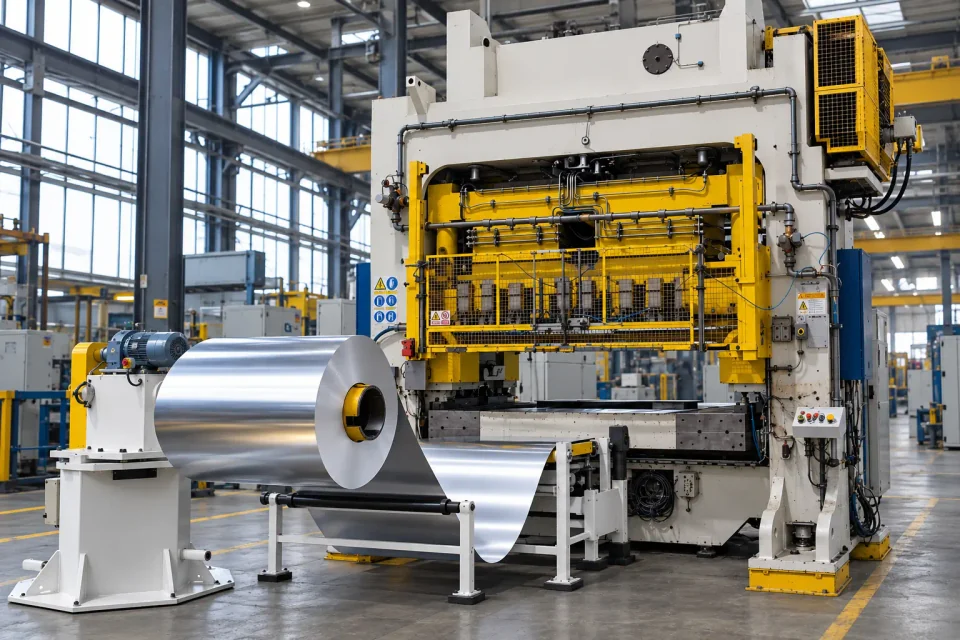
A Cupper Press Machine had no fencing, no accessible Emergency Stop, and no guarding at its pressing area — leaving operators exposed to struck-by and crushing hazards during coil handling and pressing. Here's what we found — and the solution we engineered.
The Cupper Press Machine handles large aluminium coils through a coil car, a rotating mandrel, and a pressing operation. A pre-project hazard review found five distinct ways a person could be exposed to hazardous motion — from simply walking into the unguarded operating area to a pressing mechanism with no guard at all. Every modification below was implemented specifically against one or more of these findings.
Hazards Identified5
Safety Systems Integrated5
A pre-project hazard review of the cell found 5 distinct ways personnel could be exposed to hazardous motion.
In short, the cell exposed personnel to
Unrestricted Machine Access
No fencing separated personnel from the Cupper Press Machine's operating area, allowing direct access during operation.
Struck-By Risk Behind the Coil
The large aluminium coil blocked the operator's view of the coil car and mandrel areas, risking injury to anyone in that blind zone during movement or rotation.
Delayed and Unguarded Stopping
The machine had no easy-to-reach Emergency Stop and no guard around the pressing area. That made it slow to stop in an emergency, and left the pressing mechanism fully exposed.
All 5 hazards, in detail
There was no protective fencing provided around the Cupper press machine. Any person could access the machine operating area during operation, resulting in a risk of injury.
Due to the large size of the aluminium coil, the operator could not clearly see the area behind the coil while moving the coil car. If a person entered the area, there was a risk of injury.
After the aluminium coil was fixed on the mandrel, the mandrel was rotated. Due to the large size of the coil, the area behind the coil was not visible to the operator. If a person entered this area during operation, there was a risk of being struck by the rotating coil and suffering injury or falling to the ground.
No easily accessible Emergency Stop device was provided near the machine operating area. In an emergency, the operator had to reach the control panel to stop the machine, which could delay emergency stopping.
No safety protection device or guard was provided at the coil pressing area. The operator could directly access the hazardous pressing area during machine operation, creating a risk of hand or finger crushing due to the moving press mechanism.
Overall, the identified Cupper Press Machine hazards were addressed through safety fencing, interlocked access doors, light curtain detection, emergency stop and reset control, and a fully interlocked restart-prevention safety logic.
Tell us about your cell or line and we'll walk it the same way — hazard by hazard.