 Prazamana
LVD Testing
Electrical safety testing against the Low Voltage Directive — verifying protection against electric shock, fire, and other electrical hazards on machinery.
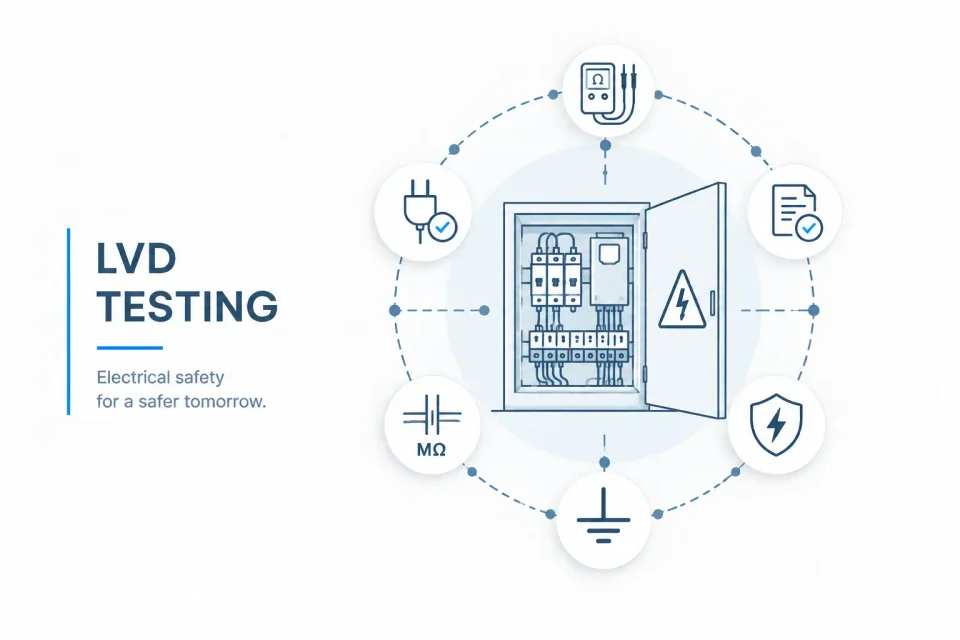
What Does LVD Testing Cover?
LVD testing verifies that the electrical equipment on a machine — operating within the voltage limits of 50–1000V AC or 75–1500V DC — is safe against electric shock, fire, and other electrical hazards, in line with the Low Voltage Directive 2014/35/EU and its harmonised standards (e.g. IEC 60204-1 for machinery electrical equipment).
Why Does It Matter?
Electrical faults are among the fastest-developing, highest-severity hazards on any machine — they can cause shock, arc flash, or fire in milliseconds, with no warning. LVD compliance isn't optional: it's one of the core Directives a machine must satisfy before CE marking, alongside the Machinery Directive and EMC Directive.
Scope
LVD Testing applies wherever a machine's electrical equipment needs to be verified against electric shock, fire, and other electrical hazards.
- Insulation resistance testing
- Protective earthing continuity
- Dielectric strength testing
- Electrical panel and wiring verification against IEC 60204-1
Standards
The regulatory basis for this testing is already established elsewhere in Prazamana's compliance work.
- Low Voltage Directive
- 2014/35/EU
- Reference Standard
- IEC 60204-1
LVD testing verifies that the electrical equipment on a machine — operating within the voltage limits of 50–1000V AC or 75–1500V DC — is safe against electric shock, fire, and other electrical hazards, in line with the Low Voltage Directive 2014/35/EU and its harmonised standards (e.g. IEC 60204-1 for machinery electrical equipment).
Related Solutions
Need LVD Testing?
Tell us about the machinery and its destination market and we'll scope the testing.