 Prazamana
Noise Testing
Emission sound pressure level measurement to verify a machine's declared noise values meet regulatory requirements, per ISO 11202.
What Does Noise Testing Cover?
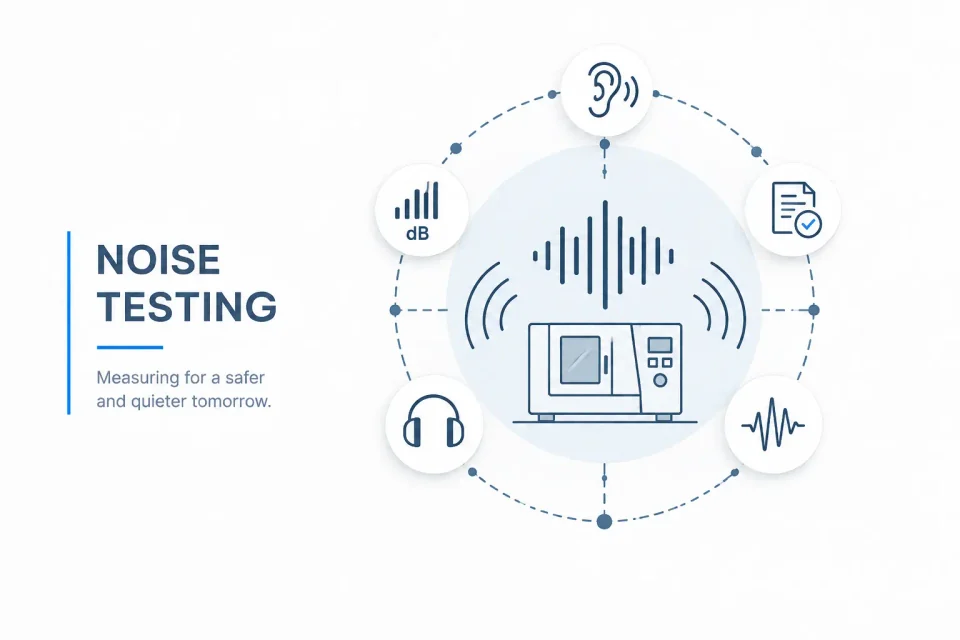
Noise testing measures the emission sound pressure level at the operator's position and other specified locations around a machine, following standardised methods such as ISO 11202, and determines whether the declared noise emission values meet regulatory and harmonised-standard requirements.
Why Does It Matter?
Noise isn't just a comfort issue — sustained exposure above 85 dBA is a recognised occupational health hazard linked to permanent hearing loss, and the Machinery Directive requires manufacturers to declare A-weighted emission sound pressure levels in the instructions for use. Getting this wrong means either understating a real hazard to operators, or over-specifying costly noise controls that weren't actually needed.
Scope
Noise Testing applies wherever a machine's declared noise emission values need to be verified.
- On-site or type-test measurement under normal operating conditions
- Environmental correction of measured values
- A-weighted emission sound pressure level determination
- Fully traceable test report for the technical file
Standards
ISO 11202 sets the method for measuring emission sound pressure levels; ISO 4871 sets how the declared noise values are stated in the instructions for use.
- Test Method
- ISO 11202
- Declaration Standard
- ISO 4871
Noise testing measures the emission sound pressure level at the operator's position and other specified locations around a machine, following standardised methods such as ISO 11202, and determines whether the declared noise emission values meet regulatory and harmonised-standard requirements.
Related Solutions
Need Noise Testing?
Tell us about the machinery and its destination market and we'll scope the testing.